


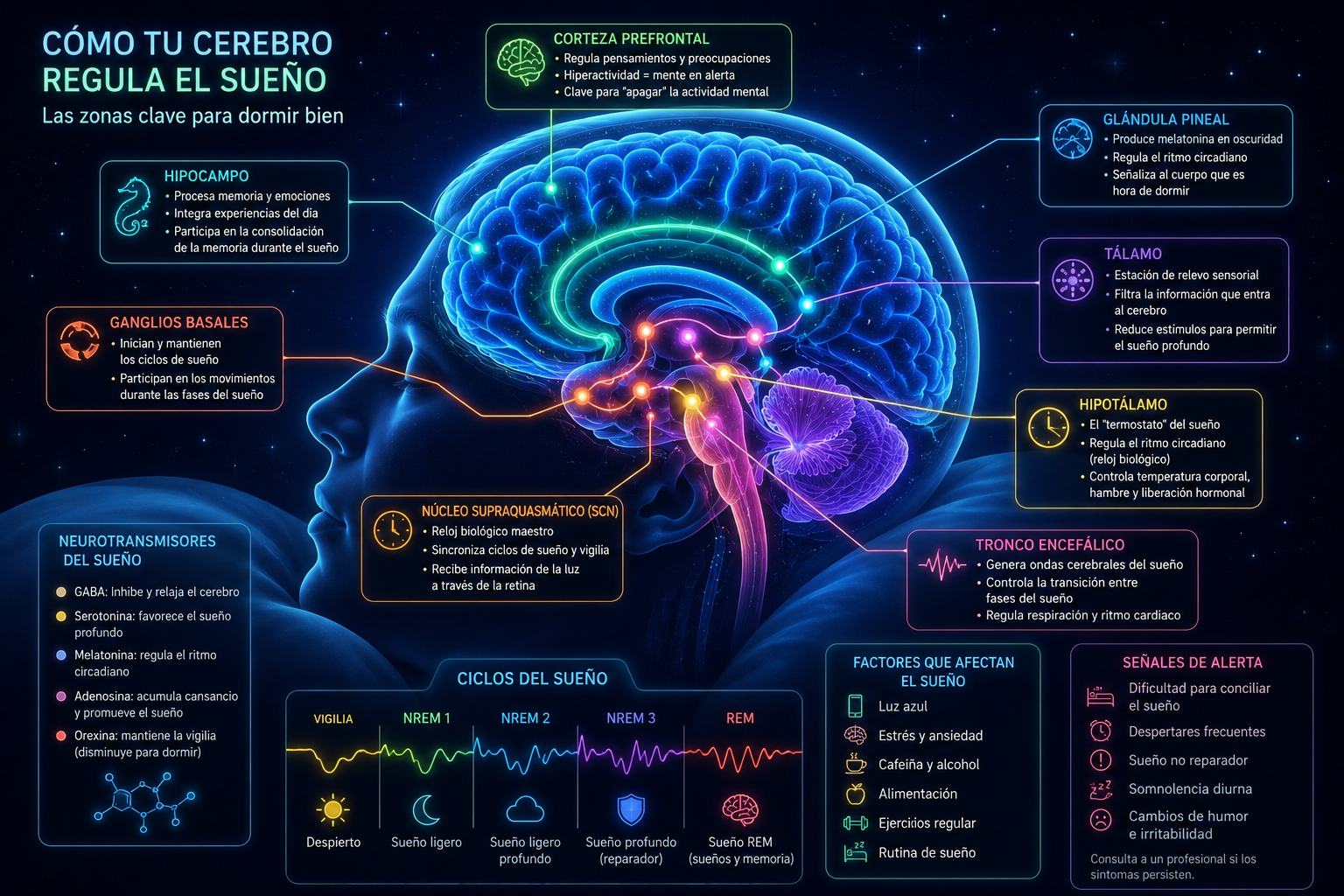
Sleeping well does not simply depend on going to bed early. Sleep is the result of a complex interaction between hormones, metabolism, nutrition, the nervous system, breathing, and lifestyle habits. When any of these factors become disrupted, difficulties falling asleep, frequent night-time awakenings, or waking up feeling unrefreshed may occur.
If you have been wondering for some time why you are not resting as well as you should, here are some of the most common causes worth investigating.
1. Thyroid Function Disorders
The thyroid gland regulates much of the body’s metabolism and can significantly influence sleep quality.
When thyroid activity is insufficient (hypothyroidism), it is common to experience fatigue during the day, but also poor-quality, non-restorative sleep at night. Conversely, excessive thyroid activity (hyperthyroidism) may cause nervousness, palpitations, anxiety, and frequent awakenings.
Associated Symptoms
- Unexplained weight changes.
- Persistent feelings of being too cold or too hot.
- Hair loss.
- Brittle nails.
- Mood changes.
- Constipation.
- Difficulty concentrating.
- Menstrual irregularities.
2. Digestive Problems and Intestinal Infections
Certain parasitic infections can disrupt sleep, particularly when they cause night-time anal itching, digestive discomfort, or intestinal inflammation.
Although some parasites have specific biological cycles, there is no strong scientific evidence that all parasites become systematically active during particular hours of the night. However, the symptoms they cause may contribute to repeated awakenings and reduced sleep quality.
Associated Symptoms
- Night-time anal itching.
- Bruxism (teeth grinding).
- Abdominal bloating.
- Morning fatigue.
- Difficulty concentrating.
- Recurrent digestive complaints.
3. Liver Health and Sleep Quality
The liver plays a role in numerous metabolic processes related to detoxification and energy regulation. Certain liver conditions may affect sleep, particularly when inflammation, fatty liver disease, or metabolic disturbances are present.
It is often claimed that waking between 1 a.m. and 3 a.m. indicates a liver problem. This idea originates from Traditional Chinese Medicine but lacks sufficient scientific evidence. Nevertheless, if awakenings are persistent and accompanied by other symptoms, a medical assessment may be advisable.
Associated Symptoms
- Persistent fatigue.
- A feeling of abdominal heaviness or discomfort.
- Intolerance to very fatty meals.
- Irritability.
- Digestive disturbances.
4. Hormonal Changes
Hormones have a direct influence on sleep.
During perimenopause and menopause, declining levels of oestrogen and progesterone may contribute to night-time awakenings, hot flushes, and difficulty maintaining deep sleep.
In men, the gradual age-related decline in testosterone may also affect sleep quality.
Associated Symptoms
- Night sweats and hot flushes.
- Excessive sweating during the night.
- Menstrual irregularities.
- Reduced libido.
- Mood changes.
- Fluid retention.
- Unexplained weight fluctuations.
5. Vitamin B12 or Folate Deficiency
Vitamin B12 and folate are involved in essential neurological processes and contribute to the production of neurotransmitters associated with wellbeing and restful sleep.
Deficiencies are relatively common in older adults, vegetarians and vegans without appropriate supplementation, as well as individuals with digestive conditions that impair nutrient absorption.
Associated Symptoms
- Severe fatigue.
- Tingling sensations in the hands and feet.
- Dizziness.
- Palpitations.
- Memory problems.
- Difficulty concentrating.
- A sore or inflamed tongue.
6. Imbalances in the Gut Microbiome
The gut microbiome and the brain maintain constant communication through what is known as the gut–brain axis.
Some studies suggest that alterations in gut flora may influence mood, inflammation, and sleep quality. In addition, repeated courses of antibiotics and diets high in sugar and ultra-processed foods may promote microbial imbalances.
Although the term “intestinal candida” is frequently used on social media, clinically significant Candida overgrowth is not as common as is often claimed.
Associated Symptoms
- Abdominal bloating.
- Frequent wind.
- Strong cravings for sweet foods.
- Mental fatigue.
- Recurrent fungal infections.
- Persistent digestive complaints.
7. Chronic Intestinal Inflammation
The gut contributes to the production of numerous substances that indirectly influence sleep and mood.
When chronic intestinal inflammation, irritable bowel syndrome, undiagnosed coeliac disease, or microbiome disturbances are present, sleep problems may develop due to digestive discomfort and ongoing inflammatory responses.
Associated Symptoms
- Frequent bloating.
- Wind after meals.
- Gastro-oesophageal reflux.
- Diarrhoea or constipation.
- Recent food intolerances.
- Sleepiness or fatigue after eating.
8. Obstructive Sleep Apnoea
Sleep apnoea is one of the most common and underdiagnosed causes of non-restorative sleep.
During the night, breathing repeatedly stops for several seconds, causing micro-awakenings that the individual usually does not remember. As a result, sleep loses both its depth and restorative function.
Associated Symptoms
- Loud snoring.
- Night-time choking or gasping sensations.
- Morning headaches.
- Daytime sleepiness.
- Concentration difficulties.
- High blood pressure.
If someone has told you that you snore heavily or stop breathing during sleep, it is worth consulting a sleep specialist.
How to Improve Sleep: Evidence-Based Measures
Step 1: Reduce Factors That Disrupt Sleep
For at least two weeks, try to avoid:
- Caffeine late in the afternoon.
- Screen use during the hour before bedtime.
- Large or very late evening meals.
- Alcohol before going to bed.
- Excessive sugar and ultra-processed foods at dinner.
- Going to bed with high levels of stress or mental stimulation.
Step 2: Ensure Adequate Nutrient Intake
A balanced diet may support the natural production of neurotransmitters associated with restful sleep.
Sources of Magnesium
- Pumpkin seeds.
- Almonds.
- Spinach.
- Swiss chard.
- Pure cocoa.
- Avocado.
Sources of Tryptophan
- Turkey.
- Eggs.
- Chickpeas.
- Oats.
- Sunflower seeds.
- Bananas.
Sources of Vitamin B6
- Chicken.
- Tuna.
- Chickpeas.
- Pistachios.
- Sesame seeds.
Sources of Potassium
- Avocado.
- Bananas.
- Sweet potatoes.
- Coconut water.
Some fruits, such as kiwifruit and tart cherries, have also shown modest positive effects on sleep quality in various studies.
Step 3: Adopt Habits That Support the Nervous System
- Maintain regular sleep schedules.
- Get exposure to natural daylight in the morning.
- Practise breathing exercises or relaxation techniques.
- Engage in regular physical activity.
- Establish a calm bedtime routine.
What About Supplements and Medicinal Plants?
Some natural substances have shown benefits for certain individuals:
- Magnesium (particularly magnesium glycinate).
- Passionflower.
- Lemon balm.
- Valerian.
- Sage (during menopause).
- Black cohosh (for certain menopausal symptoms).
However, results vary from person to person, and these should not replace a medical assessment when insomnia is persistent.
Important Precautions
Before taking supplements or medicinal herbs, consult a healthcare professional if you:
- Take anticoagulant medication.
- Use medication for high blood pressure.
- Are pregnant or breastfeeding.
- Have kidney disease.
- Take antidepressants or other psychiatric medications.
- Use sleeping tablets or other sleep medications.
Insomnia is not always an isolated problem. It is often a sign that something else may be happening within the body: hormonal imbalances, breathing disorders, nutritional deficiencies, chronic stress, or digestive problems.
Before seeking quick fixes, it is worth investigating the underlying cause. Sleeping well is not a luxury—it is a fundamental biological necessity for physical, mental, and emotional health.