


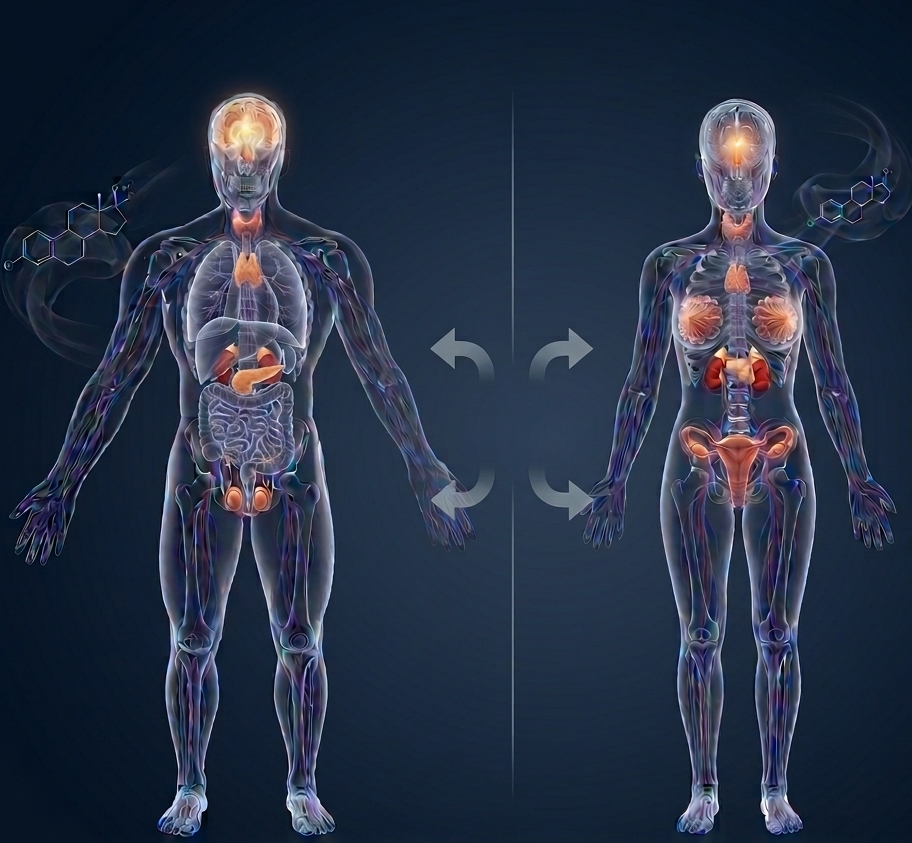
We live surrounded by chemicals that make our daily lives easier, but some of them can silently interfere with our hormonal system. These are known as endocrine disruptors, and their impact on reproductive, metabolic, thyroid and neurological health is increasingly well documented. In this article, I explain what they are, where they are found, how they affect men and women differently, and what we can do — both individually and politically — to reduce their impact.
What are endocrine disruptors?
Endocrine disruptors (EDCs) are chemicals external to the body capable of interfering with the synthesis, release, transport, metabolism or elimination of hormones, thereby disrupting the endocrine balance.
They can:
- Mimic hormones (for example, oestrogens)
- Block their receptors
- Alter their production or breakdown
- Cause epigenetic changes that affect gene expression in the long term, including in future generations
Well-known examples include:
- Bisphenols (BPA, BPS, BPF)
- Phthalates
- PFAS
- Dioxins
- Organochlorine pesticides
- Brominated flame retardants
How do they affect health?
Endocrine disruptors impact multiple systems: reproductive, thyroid, metabolic, neurological and immune, with particular vulnerability during pregnancy, childhood and puberty.
In men
Scientific evidence links chronic exposure to EDCs with:
- ↓ Sperm production and quality
- Alterations in testosterone
- Increased risk of unexplained infertility
- Changes in foetal genital development
- Higher incidence of testicular and prostate cancer in exposed populations
Metabolic (insulin resistance, obesity) and neurobehavioural effects have also been reported.
In women
In women, endocrine disruptors are associated with:
- Menstrual cycle disturbances
- Anovulation and infertility
- Polycystic ovary syndrome (PCOS)
- Endometriosis and fibroids
- Premature ovarian failure
- Increased risk of hormone-dependent cancer
During pregnancy, exposure can affect the foetus’s hormonal and neurological programming.
Where are they found?
Food and water
- Plastic packaging
- Cans with epoxy coatings (BPA)
- Pesticide residues
- Water contaminated with PFAS, heavy metals or dioxins
Cosmetics and hygiene products
- Phthalates, parabens, triclosan
- Synthetic perfumes
- Chemical sunscreens
Home
- Detergents and cleaning products
- Air fresheners
- Household dust (a key source of chronic exposure)
- Worn non-stick cookware
Air
- Polycyclic aromatic hydrocarbons (PAHs) from combustion
- Industrial and urban pollution
How can you avoid them and minimise their effects?
Although it is impossible to eliminate exposure entirely, it can be significantly reduced within a few weeks, as shown by studies where urinary levels of BPA and phthalates decrease in just 14 days following lifestyle changes.
Diet
- Prioritise fresh, organic and seasonal foods
- Avoid ultra-processed and packaged foods
- Do not heat food in plastic
- Use containers made of glass, stainless steel or ceramic
- Filter water if contamination is suspected
Home
- Ventilate daily
- Remove air fresheners and synthetic candles
- Dust with damp cloths
- Replace damaged non-stick cookware (Teflon)
Personal care
- Avoid cosmetics containing:
- “Fragrance/parfum”
- Parabens
- Phthalates
- Triclosan
Protective nutrition
The role of phytochemicals in reducing EDC-induced genetic damage is highlighted:
- Cruciferous vegetables (broccoli, cabbage)
- Citrus fruits
- Red berries
- Green tea (matcha)
Useful apps for easily analysing products
Some apps help identify endocrine disruptors by scanning barcodes:
- Yuka – Food and cosmetics, easy to use.
- Think Dirty – Specialised in cosmetics and personal care.
- INCI Beauty – Detailed analysis of cosmetic ingredients.
- EWG Healthy Living – Evidence-based toxicological assessment.
These are useful tools for making quick decisions in the supermarket or chemist’s.
What legal measures should be taken from a scientific perspective?
Based on current evidence, the main regulatory recommendations are:
1. Apply the precautionary principle
Do not wait for definitive proof of harm to restrict substances with consistent evidence of hormonal disruption.
2. Reform toxicological assessment systems
EDCs:
- Act at low doses
- Exhibit non-linear dose-response curves
- Have combined effects (cocktail effect), which requires new regulatory models more in line with modern endocrinology.
3. Ban false substitutions
Replacing BPA with BPS or BPF has been shown to maintain similar hormonal effects. Bans are required by chemical families, not just for individual molecules.
4. Mandatory clear labelling
Consumers must know whether a product contains substances with known or suspected endocrine activity.
5. Enhanced protection for vulnerable populations
In particular:
- Pregnant women
- Babies and children
- People with thyroid, reproductive or metabolic disorders
Endocrine disruptors represent one of the greatest silent health challenges of the 21st century. Their cumulative, intergenerational and multisystemic effects demand both an individual and a collective response. Reducing daily exposure is possible, measurable and clinically relevant — but true protection requires regulatory changes based on current endocrinological science, not just classical toxicology.