


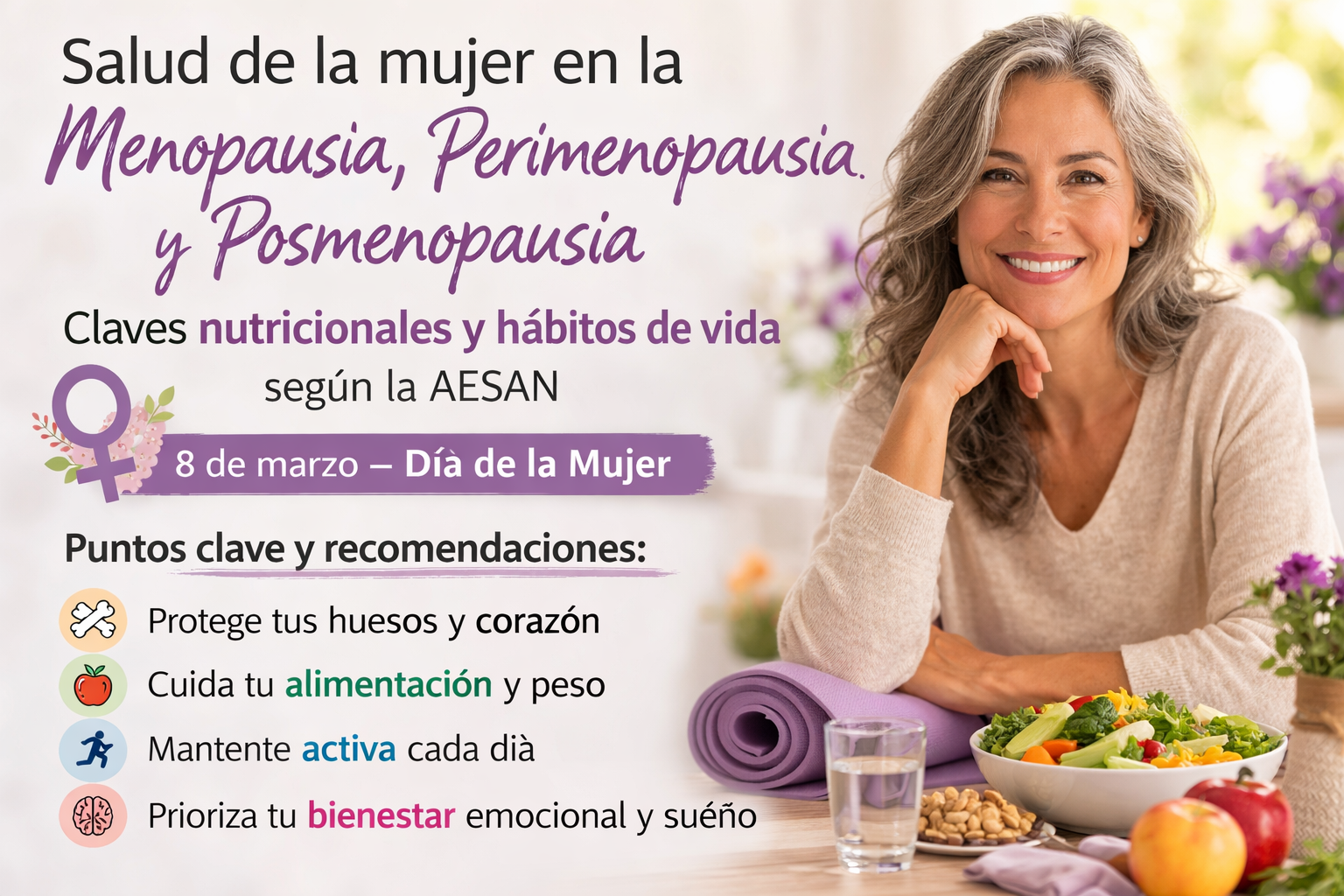
Menopause is a natural stage in a woman’s life, but it is also a time of significant physiological changes that can affect metabolic, bone, cardiovascular and emotional health.
On the occasion of International Women’s Day (8 March), it is particularly relevant to review the Report of the Scientific Committee of the Spanish Agency for Food Safety and Nutrition (AESAN) on nutritional risks during perimenopause, menopause and postmenopause.
This scientific document analyses how hormonal changes—mainly the decrease in oestrogen—influence women’s metabolism, body composition and nutritional needs.
Below, we summarise the main findings and recommendations from a nutritional and lifestyle perspective.
Physiological changes during menopause and their nutritional impact
During the menopausal transition, hormonal changes occur that affect multiple systems in the body.
Among the most relevant changes are:
1. Changes in body composition
The decrease in oestrogen promotes:
- an increase in body fat, especially abdominal fat
- progressive loss of muscle mass (sarcopenia)
- a decrease in basal energy expenditure
This means that many women experience weight gain even without changes in diet.
2. Increased cardiovascular risk
The report notes that after menopause, the risk of the following increases:
- dyslipidaemia
- hypertension
- metabolic syndrome
- cardiovascular disease
This is due to changes in lipid metabolism and body fat distribution.
3. Loss of bone mass
The reduction in oestrogen accelerates bone resorption, which increases the risk of:
- osteopenia
- osteoporosis
- fractures
This process can begin even during perimenopause.
4. Metabolic changes
Changes are also observed in:
- glucose metabolism
- insulin sensitivity
- systemic inflammation
This increases the risk of type 2 diabetes.
Nutritional risks identified by AESAN
The report highlights that many women at this stage have inadequate intakes of key nutrients, especially:
Calcium
Essential for bone health.
Without sufficient consumption, the risk of osteoporosis increases.
Vitamin D
Essential for:
- calcium absorption
- muscle function
- immune system
However, a large part of the population is deficient in vitamin D.
Protein
Insufficient intake contributes to:
- loss of muscle mass
- weakness
- increased risk of falls
Fibre
Many Western diets contain less than the recommended amount of fibre, which contributes to:
- weight gain
- poorer glycaemic control
- intestinal disorders.
Key nutritional recommendations based on scientific evidence
Based on the analysis of the report, these are some of the most important nutritional strategies for women’s health at this stage.
1. Prioritise a Mediterranean diet
Scientific evidence supports the Mediterranean pattern for reducing cardiovascular risk.
It should include:
- vegetables and greens daily
- fresh fruit
- legumes
- fish
- extra virgin olive oil
- nuts
And limit:
- ultra-processed foods
- added sugars
- trans fats.
2. Ensure sufficient protein
To preserve muscle mass, the following is recommended:
A minimum intake of 1–1.2 g of protein per kg of body weight per day
Recommended sources:
- Fish
- Eggs
- Legumes
- Dairy products
- Nuts
Protein should be distributed throughout the day.
3. Take care of bone health
It is essential to ensure:
Calcium: 1000–1200 mg daily
Food sources:
- dairy products
- yoghurt
- cheese
- sardines with bones
- almonds
- green leafy vegetables.
Vitamin D:
- moderate sun exposure
- oily fish
- eggs.
In some cases, supplementation may be necessary, always under the supervision of a healthcare professional.
4. Increase fibre intake
At least 25–30 g daily is recommended.
This helps to:
- control weight
- improve intestinal transit
- regulate glucose and cholesterol.
Main sources:
- fruit
- vegetables
- legumes
- whole grains.
5. Choose healthy fats
Unsaturated fats have a protective effect on the cardiovascular system.
Prioritise:
- extra virgin olive oil
- avocado
- nuts
- oily fish.
Reduce:
- saturated fats
- ultra-processed products.
Essential lifestyle habits during the menopause
The AESAN report also stresses that nutrition must be accompanied by healthy lifestyle habits.
Regular physical activity
Exercise is one of the most important factors for health at this stage.
It is recommended to combine:
aerobic exercise
- walking
- cycling
- swimming
with strength training
- weights
- elastic bands
- functional training
This helps to:
- maintain muscle mass
- protect bones
- improve metabolism.
Body weight control
An increase in visceral fat can increase the risk of:
- diabetes
- cardiovascular disease
- chronic inflammation.
A balanced diet combined with physical activity is key to preventing this.
Sleep and emotional well-being
During menopause, the following are common:
- sleep disturbances
- anxiety
- mood swings.
Useful strategies include:
- maintaining sleep routines
- reducing caffeine consumption
- practising relaxation techniques
- encouraging social support.
Conclusion: menopause as an opportunity to take better care of yourself
Menopause should not be understood solely as a stage marked by hormonal losses or the emergence of new health risks.
As the AESAN Scientific Committee report points out, it is also a key moment in which lifestyle habits take on an even more decisive role in women’s present and future health. From a nutritional and lifestyle perspective, this stage invites us to review our relationship with our bodies, our diet and self-care.
Prioritising foods of high nutritional quality, maintaining adequate protein intake, taking care of bone health with sufficient calcium and vitamin D, favouring foods rich in iron, antioxidants and fibre, and maintaining regular physical activity are not just clinical recommendations: they are tools for preserving autonomy, energy and quality of life.
Furthermore, every woman experiences this transition differently. Factors such as previous nutritional status, gut health, muscle mass, rest and stress profoundly influence how menopause is experienced. Therefore, beyond general recommendations, it is essential to personalise diet and lifestyle habits, adapting them to each woman’s history, needs and context.
In this sense, the nutritional approach should not be limited to avoiding deficiencies or preventing disease, but rather to accompanying women through a stage of change, helping them to maintain their physical and emotional well-being.
Because, ultimately, menopause is not just a biological process: it is another stage of life that deserves to be lived with information, awareness and care. And nutrition, when understood from an integrative and respectful perspective, can become one of the best allies for getting through it with health and balance.
Happy International Women’s Day!